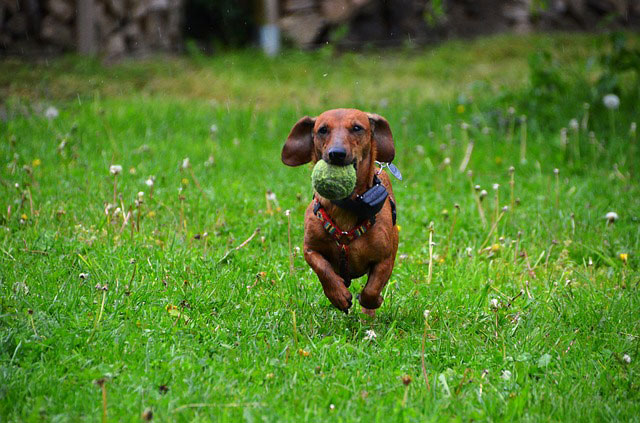
Dachshund
Small BreedAbout the Dachshund
The Dachshund is a small-sized breed. Males typically weigh between 7.3 and 14.5 kg when fully grown, while females weigh 6.8 to 13.6 kg. With an average lifespan of 12 to 16 years, the Dachshund is a long-lived breed.
Temperament
Dachshunds are bold, curious, and lively dogs with big personalities. Despite their small size, they are brave and can be surprisingly stubborn. They are loyal to their families but can be wary of strangers. Dachshunds are clever and independent thinkers, which can make training challenging. They can be prone to excessive barking and may develop small dog syndrome if not properly trained.
Exercise Needs
Dachshunds need moderate exercise — about 30-60 minutes of daily walks. Despite their short legs, they are energetic and enjoy exploring. Avoid activities that strain their long backs — no jumping on/off furniture, no excessive stair climbing. Swimming is excellent exercise for Dachshunds as it does not stress their spine. Keeping them at a healthy weight is crucial for back health.
Common Health Issues
The breed's elongated body makes them highly susceptible to intervertebral disc disease (IVDD), which can cause pain, nerve damage, and paralysis. Other concerns include obesity (which worsens back problems), dental issues, patellar luxation, and progressive retinal atrophy. Keeping Dachshunds lean is the single most important health measure.
Grooming
Grooming varies by coat type — smooth-haired Dachshunds need minimal grooming, long-haired require regular brushing to prevent mats, and wire-haired need hand-stripping several times a year. All varieties shed moderately. Regular dental care is particularly important for Dachshunds as they are prone to dental problems.
Famous Dachshund Owners
Pablo Picasso adored his Dachshund Lump (German for rascal), painting him into artworks and writing a poem in his honour; Lump lived with Picasso for six years at his villa in the south of France. Andy Warhol kept two Dachshunds, Archie and Amos, who slept in his bed and whom he credited as muses, once saying he needed his Dachshunds more than anything. Queen Victoria helped popularise the breed in Britain after she and Prince Albert kept Dachshunds at Windsor. The breed's German associations caused a brief dip in British popularity during World War I, when Kaiser Wilhelm II's well-known love of Dachshunds turned them into an unfortunate symbol.
Weight & Growth
A fully grown male Dachshund weighs approximately 11 kg on average. Use Dogpanion's free size predictor to estimate your Dachshund puppy's adult weight based on their current age and weight.
Dachshund Care Tools
Dogpanion offers free tools to help you care for your Dachshund:
- Age Calculator : Convert your Dachshund's age to human years using breed-specific formulas
- Size Predictor : Estimate your puppy's adult weight
- Food Safety Checker : Check which foods are safe or toxic for dogs
- Health Tracker : Log vaccinations, vet visits, and medications
Track Your Dachshund with Dogpanion
Free age calculator, size predictor, food safety checker, and health tracker for 350+ breeds.
Open Dogpanion FreeHomemade Recipes for Your Dachshund
Every ingredient verified safe. Use as occasional treats or meal toppers alongside a complete diet.