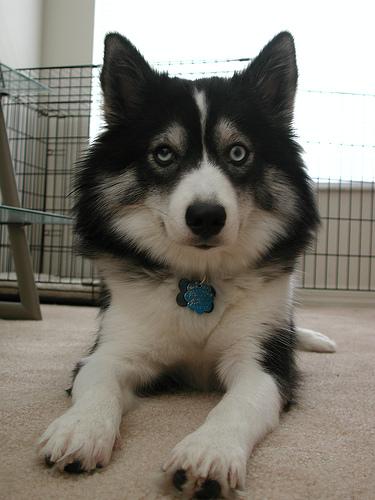
Siberian Husky
Large BreedAbout the Siberian Husky
The Siberian Husky is a large-sized breed. Males typically weigh between 20 and 27 kg when fully grown, while females weigh 16 to 23 kg. With an average lifespan of 12 to 14 years, the Siberian Husky is a moderately long-lived breed.
Temperament
Siberian Huskies are friendly, outgoing, and independent dogs bred for endurance and teamwork. They are pack animals who get along well with other dogs. Huskies are NOT guard dogs — they are friendly with everyone, including strangers. They are intelligent but independent, making training challenging. They have a strong prey drive and should not be trusted off-lead. Huskies are escape artists who can jump fences and dig under them.
Exercise Needs
Huskies have extremely high exercise needs — at least 2 hours daily. They were bred to run long distances and have seemingly limitless energy. They love running, hiking, and pulling sports (canicross, bikejoring). Without adequate exercise, Huskies will become destructive and attempt to escape. They are not suitable for sedentary owners.
Common Health Issues
Common health concerns include hip dysplasia, eye conditions (cataracts, progressive retinal atrophy, corneal dystrophy), hypothyroidism, and zinc-responsive dermatosis. They are generally a healthy breed with good longevity. Their thick coat protects them in cold weather but makes them prone to overheating in warm climates.
Grooming
Huskies have a thick double coat that sheds heavily — they "blow" their undercoat twice a year in massive shedding events. During these periods, daily brushing is essential. At other times, weekly brushing suffices. Never shave a Husky — their coat insulates them from both cold AND heat. Regular nail trimming is needed.
Famous Siberian Husky Owners
The Siberian Husky entered popular consciousness through the heroic 1925 serum run to Nome, Alaska, when a relay of sled dog teams carried diphtheria antitoxin 674 miles across Arctic wilderness to save the isolated town. Leonhard Seppala's lead Husky Togo covered the longest and most dangerous leg of the journey;261 miles; though it was the final team's lead dog Balto who received the greater initial fame, with a statue in Central Park in New York City. The story was adapted into the animated film Balto (1995) and the documentary Togo (2019), making the Siberian Husky one of the most storied working breeds in history.
Weight & Growth
A fully grown male Siberian Husky weighs approximately 24 kg on average. Use Dogpanion's free size predictor to estimate your Siberian Husky puppy's adult weight based on their current age and weight.
Siberian Husky Care Tools
Dogpanion offers free tools to help you care for your Siberian Husky:
- Age Calculator : Convert your Siberian Husky's age to human years using breed-specific formulas
- Size Predictor : Estimate your puppy's adult weight
- Food Safety Checker : Check which foods are safe or toxic for dogs
- Health Tracker : Log vaccinations, vet visits, and medications
Track Your Siberian Husky with Dogpanion
Free age calculator, size predictor, food safety checker, and health tracker for 350+ breeds.
Open Dogpanion FreeHomemade Recipes for Your Siberian Husky
Every ingredient verified safe. Use as occasional treats or meal toppers alongside a complete diet.