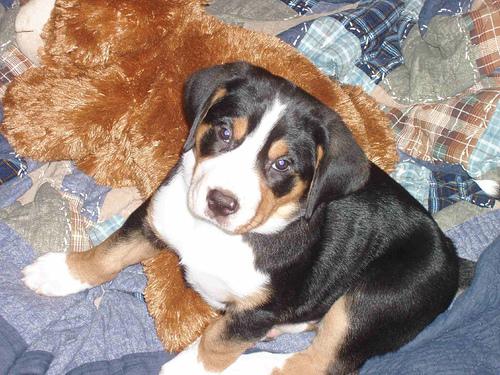
Greater Swiss Mountain Dog
Large BreedAbout the Greater Swiss Mountain Dog
The Greater Swiss Mountain Dog is a large-sized breed. Males typically weigh between 45 and 64 kg when fully grown, while females weigh 36 to 50 kg. With an average lifespan of 8 to 11 years, the Greater Swiss Mountain Dog is a average-lived breed.
Temperament
Greater Swiss Mountain Dog dogs are confident, loyal, and often naturally protective of their families. They are intelligent and trainable, responding best to firm but fair handling. Early socialisation is important to ensure they grow into well-mannered adults. Despite their imposing size, many are gentle and affectionate with their families, including children.
Exercise Needs
Greater Swiss Mountain Dog dogs are active and need at least 1-2 hours of vigorous daily exercise. Long walks, hiking, and off-lead running in safe areas are ideal. They have good stamina and enjoy outdoor adventures. Puppies should have controlled exercise to protect growing joints. Mental stimulation through training is also essential.
Common Health Issues
As a large breed, Greater Swiss Mountain Dog dogs may be prone to hip and elbow dysplasia, bloat (gastric dilatation-volvulus), and joint problems. Large breeds can also be susceptible to certain cancers and heart conditions. Feeding a large-breed-specific diet during growth helps prevent skeletal issues. Regular veterinary check-ups are essential for early detection of health problems.
Grooming
Greater Swiss Mountain Dog dogs need regular grooming including weekly brushing to manage their coat and reduce shedding. Bathing can be challenging due to their size — a walk-in shower or professional groomer may be helpful. Regular nail trimming is important. Check ears regularly, especially if they are floppy, as moisture can lead to infections.
Famous Greater Swiss Mountain Dog Owners
Professor Albert Heim, the Swiss geologist who documented all four Swiss mountain dog breeds, distinguished the Greater Swiss Mountain Dog from the Bernese Mountain Dog in 1908 after meeting dogs exhibited at the Swiss Kennel Club's jubilee show. Heim identified the "Grosser Schweizer Sennenhund" as a distinct ancient type and championed its revival, recognising it as a descendant of the mastiff dogs that accompanied Roman legions into Switzerland. The breed was nearly extinct by the early 20th century before Heim's intervention and subsequent efforts by Swiss breeders established a viable population. Today it is recognised internationally as one of Switzerland's great native breeds.
Weight & Growth
A fully grown male Greater Swiss Mountain Dog weighs approximately 55 kg on average. Use Dogpanion's free size predictor to estimate your Greater Swiss Mountain Dog puppy's adult weight based on their current age and weight.
Greater Swiss Mountain Dog Care Tools
Dogpanion offers free tools to help you care for your Greater Swiss Mountain Dog:
- Age Calculator : Convert your Greater Swiss Mountain Dog's age to human years using breed-specific formulas
- Size Predictor : Estimate your puppy's adult weight
- Food Safety Checker : Check which foods are safe or toxic for dogs
- Health Tracker : Log vaccinations, vet visits, and medications
Track Your Greater Swiss Mountain Dog with Dogpanion
Free age calculator, size predictor, food safety checker, and health tracker for 350+ breeds.
Open Dogpanion FreeHomemade Recipes for Your Greater Swiss Mountain Dog
Every ingredient verified safe. Use as occasional treats or meal toppers alongside a complete diet.